
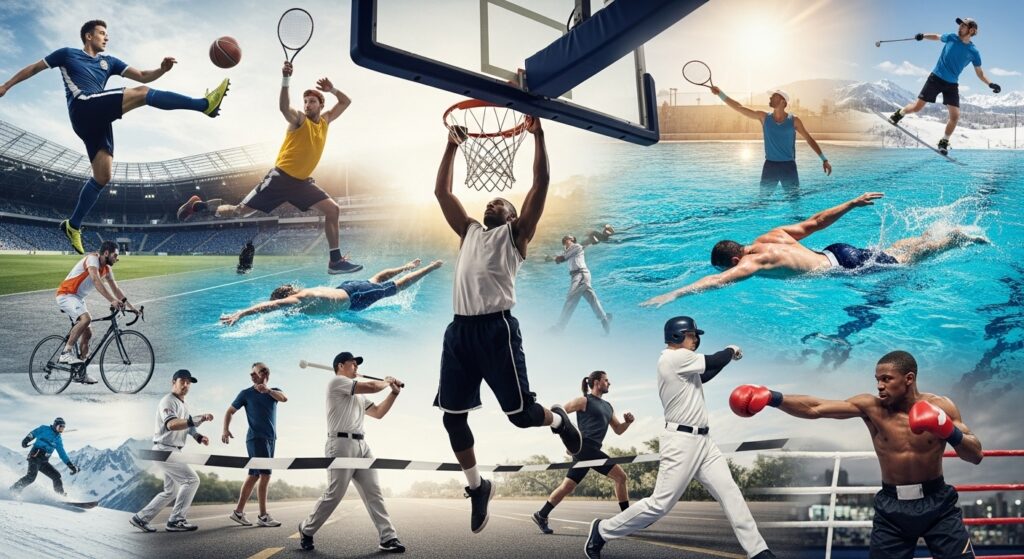
Sports have long held a central place in the hearts and minds of people worldwide. From the ancient athletic contests in Greece to the modern-day billion-dollar sporting leagues, the development of sports has mirrored humanity’s own evolution. Sports are more than just games; they reflect the values, ambitions, and progress of societies. They shape our cultures, influence our behavior, and offer a platform for social interaction and personal achievement. In this blog post, we will explore the history, impact, and role of sports in society, while examining how they have transformed into the powerful force they are today.
The Origins of Sports: Rooted in Ancient Civilizations
The history of sports dates back to ancient times, where physical activity was often closely tied to religious rituals, survival, and military training. Early civilizations used sports not only to promote physical fitness but also to honor gods, display strength, and maintain social order.
In Ancient Egypt, for example, physical fitness was central to preparing individuals for battle and survival. The Egyptians practiced archery, wrestling, and running, not just as recreational activities, but as essential skills for everyday life. Pharaohs and nobility often participated in sports to demonstrate their physical prowess and to maintain their elite status.
The Greek civilization elevated sports to a spiritual level, using them as both a tribute to the gods and a reflection of human achievement. The most iconic example of Greek athleticism is the Olympic Games, which began in 776 BCE in Olympia. Initially, these games were a religious festival held in honor of the god Zeus. Athletes competed in running, wrestling, and other events, aiming to demonstrate the physical excellence that the Greeks so highly valued. As the games became more formalized, they grew in significance, drawing competitors from across the Greek world. The Olympics came to symbolize the Greek ideals of competition, honor, and unity.
Rome, in contrast, used sports largely for entertainment. Gladiatorial games, chariot races, and mock battles in massive amphitheaters such as the Colosseum were designed to entertain the masses and reinforce the authority of the Empire. These games were often brutal and bloodthirsty, highlighting the Romans’ view of sports as a means of spectacle and control.
While the purposes of sports varied in different cultures, one common thread is clear: sports were a means of showcasing physical prowess, often in highly publicized and organized events. They served as both a form of training and a way to display cultural values, whether that be in war, religion, or entertainment.
The Birth of Modern Sports: The 19th Century and Beyond
Though sports were an integral part of early societies, the form we know today—organized competitions governed by rules—did not emerge until the 19th century. The Industrial Revolution brought profound societal changes, including increased urbanization and a growing middle class with more leisure time. As people began to move away from agricultural work and into cities, the demand for structured forms of recreation grew. This led to the formalization of many modern sports.
In Britain, sports such as football (soccer), rugby, and cricket underwent significant standardization. The creation of the Football Association in 1863 helped formalize the rules of football, laying the groundwork for the sport’s widespread popularity. Rugby and cricket also became formalized during this time, and the first international competitions began to take shape. These sports spread across the globe, carried by British colonialism, and quickly became popular in countries around the world.
In the United States, sports like baseball and basketball gained prominence during the late 19th and early 20th centuries. Baseball, often referred to as “America’s pastime,” became the national sport. With the formation of Major League Baseball (MLB) in 1869, the sport of baseball was transformed from a casual activity into a professional league that would become a cornerstone of American culture. Similarly, basketball, invented in 1891 by James Naismith, became widely popular, with the establishment of the National Basketball Association (NBA) in the mid-20th century.
Meanwhile, the first modern Olympic Games were revived in 1896 by Pierre de Coubertin, inspired by the ancient Greek tradition. The modern Olympics offered athletes from all over the world the chance to compete in a variety of events, promoting international peace, unity, and competition. This marked a significant step toward the globalization of sports and the formalization of sports as a global institution.
The Globalization of Sports: A Unifying Force
As the 20th century progressed, the growth of sports expanded beyond national borders. With advances in transportation, communication, and media, sports became a truly global phenomenon. The popularity of football (soccer) exploded worldwide, with the FIFA World Cup, first held in 1930, becoming the most-watched sporting event in the world. Similarly, the Olympics grew in size and prestige, drawing athletes from virtually every country.
Sports have the unique ability to bring people together, transcending cultural, linguistic, and political boundaries. In moments of international competition, sports provide a platform for countries to come together in a peaceful manner, despite their differences. The Olympic Games, for example, have long served as an occasion for countries to set aside their differences and celebrate the spirit of competition and unity.
Football, in particular, has become a universal language. Whether in the streets of Rio de Janeiro, the alleys of Istanbul, or the fields of rural Africa, football is a common bond that connects people of all backgrounds. The success of international tournaments like the FIFA World Cup and the UEFA Champions League further demonstrates the sport’s universal appeal.
The rise of global sports media has also played a crucial role in making sports a global industry. Television broadcasts, followed by the advent of digital streaming, allowed fans from all corners of the world to watch their favorite teams and athletes compete. The media’s role in promoting sports and creating larger-than-life stars has helped fuel the commercialization of sports, turning athletes into global icons and making sports a highly profitable business.
Sports as a Catalyst for Social Change
While sports have always been a reflection of societal values, they have also played a critical role in advancing social change. Throughout history, athletes have used their platforms to challenge injustice, fight for equality, and raise awareness about important social issues.
One of the most well-known examples of an athlete using sports for social change is Jackie Robinson, who broke the color barrier in Major League Baseball in 1947. By becoming the first African American to play in the major leagues, Robinson not only transformed the sport but also helped pave the way for the Civil Rights Movement in the United States. His courage and resilience in the face of racism are remembered as a symbol of the power of sports to challenge societal norms.
Muhammad Ali, another iconic figure in sports history, used his platform to fight for racial justice and oppose the Vietnam War. Ali’s decision to refuse induction into the military in 1967, citing his religious beliefs and opposition to the war, was a significant political statement that garnered widespread attention. His actions inspired a generation of athletes to become more socially conscious and to use their fame to speak out on issues of inequality.
In more recent times, Colin Kaepernick’s protest during the national anthem in 2016 sparked a nationwide debate on race and police brutality. Kaepernick’s protest, where he knelt during the anthem to raise awareness about racial injustice, ignited a movement that continues to impact the sports world today. His stance was met with both support and criticism, but it undeniably sparked a larger conversation about social inequality and the role of athletes in advocating for change.
These examples demonstrate the power of sports as a platform for activism. Athletes, as public figures, have the ability to reach vast audiences, and their actions can have a profound impact on public perception and social movements.
The Commercialization and Professionalization of Sports
As sports became more popular and accessible, they also became big business. The 20th century saw the rise of professional sports leagues, television contracts, and corporate sponsorships, which transformed sports into a massive global industry. Today, sports leagues like the NFL, NBA, and the Premier League generate billions of dollars annually from ticket sales, media rights, and sponsorships.
The commercialization of sports has led to the professionalization of athletes, with many now earning salaries that rival those of top executives in other industries. While the financial rewards for athletes have increased exponentially, this commercialization has also led to concerns about the impact of money on the integrity of sports. The pressure to win at all costs, fueled by massive financial incentives, has sometimes led to ethical compromises, including doping scandals and match-fixing allegations.
Despite these challenges, the commercial success of sports has led to increased investment in infrastructure, technology, and player development, contributing to the overall growth of sports worldwide. For example, the development of state-of-the-art stadiums and arenas, the rise of sports science, and the use of performance analytics have all enhanced the quality of competition and the fan experience.
The Role of Technology in Shaping Modern Sports
The role of technology in sports has grown exponentially in recent years. From the development of more advanced sports equipment to the use of data analytics and video technology, technology has revolutionized the way sports are played, managed, and consumed.
One of the most significant technological advances in sports has been the introduction of performance analysis tools. Coaches and athletes now use data-driven approaches to track everything from heart rate and recovery time to movement patterns and injury prevention. This information allows for more tailored training programs and helps optimize performance.
In officiating, technology has become an essential tool for ensuring fairness. Video Assistant Referee (VAR) in football, Hawk-Eye technology in tennis, and goal-line technology have all been introduced to help referees make more accurate decisions. While these technologies have sometimes been controversial, they have ultimately improved the quality of decision-making and helped reduce errors in crucial moments.
The digitalization of sports media has also transformed the way fans interact with their favorite sports. Streaming services, social media




More Stories
Beyond the Scoreboard: How Sports Shape Minds, Cultures, and the Future
Beyond the Game: The Transformative Power of Sports in Society
Beyond the Scoreboard: How Sports Shape Minds, Nations, and Everyday Life