
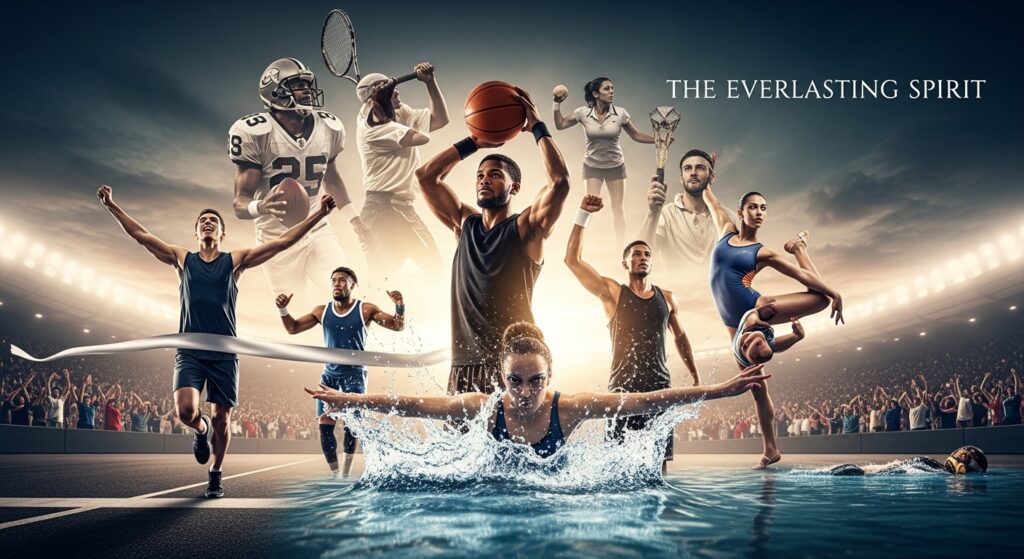
Sports have been an integral part of human civilization for centuries, serving as a platform for showcasing talent, fostering unity, and testing the limits of physical and mental endurance. From ancient games in Greece to modern-day professional leagues across the globe, sports have evolved, influencing cultures, shaping societies, and inspiring millions. In this blog, we will delve into various facets of the sporting world, exploring its significance, iconic sports, legendary athletes, and the cultural impact that makes it a universal phenomenon.
The Origins of Sports
The roots of organized sports can be traced back thousands of years. The earliest records suggest that ancient civilizations, such as the Greeks, Egyptians, and Romans, held competitions to honor gods, entertain citizens, and prepare young men for warfare. The Olympic Games in ancient Greece, first held in 776 BC, stand as a testament to humanity’s fascination with athletic prowess. These early sports included running, wrestling, javelin, and discus throw, forming the foundation of what would later become modern athletic competitions.
Over time, sports evolved from mere physical exercises and rituals into structured games with defined rules. Medieval Europe saw the rise of jousting, archery contests, and other competitive activities, while Asia developed martial arts and traditional games that reflected their cultural heritage. The industrial revolution further contributed to the growth of sports by providing leisure time and resources to organize competitions on a larger scale.
The Importance of Sports in Society
Sports play a vital role beyond physical fitness. They foster teamwork, discipline, perseverance, and strategic thinking. Participation in sports teaches individuals valuable life skills, such as goal-setting, time management, and handling success and failure gracefully. Moreover, sports serve as a medium to bridge social, cultural, and economic gaps, uniting people from diverse backgrounds under the common banner of competition and entertainment.
On a broader scale, sports can influence national pride and identity. Major tournaments like the FIFA World Cup, the Olympics, and the Super Bowl transcend borders, bringing nations together and inspiring collective enthusiasm. The power of sports to shape society is evident in charitable initiatives, youth development programs, and campaigns promoting health and wellness.
Team Sports: Building Collaboration and Strategy
Football: The Global Phenomenon
Football, known as soccer in some countries, is the world’s most popular sport, captivating billions of fans worldwide. Its simplicity—requiring just a ball and an open space—has allowed it to thrive across all continents. Football is more than a game; it is a culture. Legendary clubs, such as Real Madrid, Manchester United, and Barcelona, have cultivated fan bases that transcend generations.
Tournaments like the FIFA World Cup showcase the pinnacle of football excellence, where national pride and individual brilliance collide. Players like Pelé, Diego Maradona, Lionel Messi, and Cristiano Ronaldo have become icons, not only for their skills but also for their ability to inspire millions to chase their dreams.
Basketball: Precision and Athleticism
Basketball is a sport that combines agility, strategy, and precision. Invented by Dr. James Naismith in 1891, it has grown into a global phenomenon, with professional leagues in countries such as the United States, Spain, and China. The NBA, in particular, has become synonymous with excellence, producing legends like Michael Jordan, LeBron James, and Kobe Bryant.
Basketball’s appeal lies in its fast-paced action, teamwork, and moments of individual brilliance. Beyond professional leagues, basketball serves as a tool for social change, youth engagement, and community building in urban areas worldwide.
Cricket: The Gentleman’s Game
Cricket holds a special place in the hearts of millions, especially in countries like India, Pakistan, Australia, and England. It is a sport that blends patience, strategy, and skill. Formats such as Test cricket, One Day Internationals, and T20 provide diverse experiences for players and fans alike.
Players like Sachin Tendulkar, Brian Lara, and Shane Warne have left indelible marks on the sport, demonstrating mastery over technique and mental fortitude. Cricket also fosters a sense of national pride, where victories are celebrated with fervor, and rivalries, such as India vs. Pakistan, become legendary spectacles.
Volleyball and Rugby: Team Spirit and Endurance
Sports like volleyball and rugby emphasize collaboration, strategy, and physical endurance. Volleyball requires precise coordination and quick reflexes, making it a favorite at both recreational and professional levels. Rugby, on the other hand, is a physically demanding sport that tests strength, stamina, and tactical intelligence. Teams like New Zealand’s All Blacks have become global icons for their dominance and innovative playstyle.
Individual Sports: Testing Limits and Personal Excellence
Athletics: Speed, Strength, and Stamina
Athletics encompasses a wide range of events, including sprinting, long-distance running, jumping, and throwing. These sports test fundamental human abilities and are often considered the purest form of competition. Legendary athletes like Usain Bolt, Carl Lewis, and Florence Griffith-Joyner have redefined what humans can achieve, breaking records and inspiring generations.
Athletics also forms the backbone of the Olympic Games, where nations showcase their best talent and compete for global recognition. The combination of individual skill, training, and mental toughness makes athletics a compelling arena for excellence.
Tennis: Grace, Precision, and Mental Fortitude
Tennis is a sport that demands technical skill, physical endurance, and strategic thinking. The Grand Slam tournaments—Wimbledon, the US Open, the French Open, and the Australian Open—represent the highest stage for tennis players. Legends like Roger Federer, Serena Williams, Rafael Nadal, and Novak Djokovic have set standards of excellence that continue to inspire aspiring athletes.
Tennis also exemplifies sportsmanship and mental resilience, as players face intense pressure, long matches, and variable conditions that test both skill and determination.
Swimming: The Art of Fluid Motion
Swimming is a sport that combines grace, technique, and endurance. From freestyle to butterfly, athletes must master both speed and form to achieve excellence. Swimming competitions, especially at the Olympic level, highlight human physical limits and the rewards of rigorous training. Swimmers like Michael Phelps and Katie Ledecky have become symbols of dedication, breaking world records and raising the bar for future generations.
Combat Sports: Discipline and Mental Strength
Sports like boxing, wrestling, and martial arts emphasize discipline, strategy, and mental toughness. Boxing legends such as Muhammad Ali and Mike Tyson captivated audiences with their skill, charisma, and determination. Martial arts, including judo, karate, and taekwondo, blend physical conditioning with philosophy, emphasizing respect, focus, and inner strength.
These sports teach athletes to overcome adversity, maintain composure under pressure, and channel their energy productively, making them profound tools for personal development.
Women in Sports: Breaking Barriers
The role of women in sports has evolved dramatically over the past century. Initially marginalized, women athletes now compete at the highest levels, breaking records and challenging stereotypes. Icons like Serena Williams in tennis, Simone Biles in gymnastics, and Megan Rapinoe in football have become symbols of empowerment and excellence.
Women’s participation in sports not only inspires future generations but also drives conversations around equality, representation, and opportunity. With increasing visibility, support, and sponsorship, women in sports continue to challenge barriers and redefine what is possible.
The Role of Technology in Modern Sports
Technology has transformed the way sports are played, analyzed, and consumed. Innovations such as instant replay, goal-line technology, wearable devices, and performance analytics have enhanced both fairness and performance. Coaches and athletes now have access to data-driven insights, enabling them to optimize training, prevent injuries, and develop strategic game plans.
Moreover, broadcasting and streaming technology have brought sports to global audiences in real-time, connecting fans and creating shared experiences across continents. Virtual reality and esports are also expanding the definition of sports, attracting new audiences and blending entertainment with competition.
Iconic Sporting Events Around the World
The Olympics
The Olympics stand as the ultimate celebration of athletic excellence, uniting nations and showcasing the pinnacle of human performance. From the opening ceremony to the medal events, the Games inspire passion, patriotism, and the spirit of fair competition. Every edition introduces new sports, new talents, and unforgettable moments that etch themselves into history.
FIFA World Cup
The FIFA World Cup is the most prestigious tournament in football, drawing billions of viewers worldwide. It is a celebration of skill, strategy, and national pride, where legends are born, and rivalries are intensified. The tournament unites people through a shared love of the game and offers thrilling stories of triumph, heartbreak, and heroism.
Super Bowl
American football reaches its zenith in the Super Bowl, an event that transcends sports to become a cultural phenomenon. The game combines athletic prowess, entertainment, and spectacle, captivating millions of viewers globally. Iconic moments, memorable halftime shows, and remarkable performances make the Super Bowl an unmatched sporting event.
Wimbledon
Wimbledon, the oldest tennis tournament in the world, represents tradition, excellence, and prestige. Played on grass courts, it challenges athletes to adapt their techniques and showcase their mental resilience. Wimbledon’s history, charm, and high level of competition make it a cornerstone of tennis culture.
Sports and Youth Development
Sports play a crucial role in shaping the lives of young people. Participation in organized activities teaches discipline, resilience, teamwork, and leadership. Youth programs and school competitions provide platforms for talent discovery, nurturing future champions. Sports also promote physical and mental well-being, helping children develop healthy habits, social skills, and a sense of achievement.
The Future of Sports
The future of sports promises innovation, inclusivity, and global engagement. Emerging sports, such as esports, adventure racing, and drone competitions, are gaining recognition alongside traditional disciplines. Sustainability and environmental responsibility are becoming central to organizing events, while technology continues to redefine how sports are played, watched, and analyzed.
With growing emphasis on equality, accessibility, and mental health, sports will remain a vital part of human culture, inspiring generations to pursue excellence and celebrate the spirit of competition.
Conclusion
Sports are more than just games; they are a reflection of human ambition, creativity, and resilience. From ancient athletic rituals to modern professional leagues, sports unite people, inspire greatness, and create unforgettable moments. Whether through the teamwork of football, the precision of tennis, or the endurance of athletics, sports push boundaries, challenge limits, and enrich lives.
As society evolves, sports will continue to adapt, innovate, and inspire, remaining an essential pillar of culture and a testament to the human spirit. The world of sports is a journey of passion, competition, and excellence—one that continues to captivate and motivate millions around the globe.




More Stories
Beyond the Scoreboard: How Sports Shape Minds, Cultures, and the Future
Beyond the Game: The Transformative Power of Sports in Society
Beyond the Scoreboard: How Sports Shape Minds, Nations, and Everyday Life