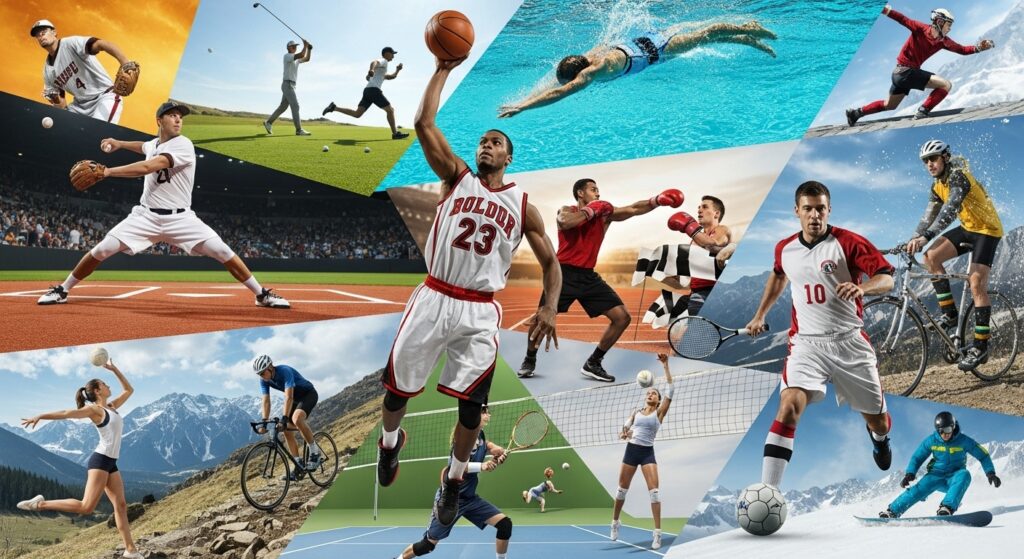
Sports have been a part of human culture for centuries, evolving in form and significance across different civilizations. From ancient rituals to modern-day entertainment, sports have not only shaped societies but also played an essential role in shaping individual lives. They bring together nations, communities, and families, offering a universal language that transcends cultural and geographical boundaries. In this blog post, we will explore the history, impact, and transformation of sports, delving into why they continue to be such a significant force in our world today.
The Origins of Sports: Ancient Civilizations and Early Competitions
The roots of organized sports can be traced back to the earliest known civilizations. From the Egyptian, Greek, and Roman empires to the indigenous cultures of Africa, Asia, and the Americas, physical activities were central to the daily lives of people. These activities ranged from rituals and religious ceremonies to preparation for battle and survival.
In ancient Egypt, for example, physical fitness was not only about strength but also about grace. Activities such as archery, running, wrestling, and even early forms of swimming were commonly practiced. The Egyptians believed that athleticism was an integral part of a person’s moral and physical development, contributing to an individual’s overall sense of well-being.
Meanwhile, in ancient Greece, sports reached new levels of organization and importance. The Olympic Games, which began in 776 BC, were an iconic part of Greek culture, held in honor of the god Zeus. The Olympic Games featured events such as running, discus throwing, wrestling, and the pentathlon, with athletes from all across the Greek world participating in what became a prestigious competition. These games were more than just athletic contests; they were a display of human excellence and physical prowess, ideals that the Greeks greatly valued.
The Romans, on the other hand, used sports as both entertainment and propaganda. Gladiatorial games, chariot races, and public executions in massive arenas like the Colosseum were key spectacles for the Roman people. These games were brutal and often deadly, but they served as a way to demonstrate the power of the Roman Empire, entertain the masses, and maintain control over society.
Sports in ancient civilizations also served social, cultural, and political purposes. They were ways to train warriors, honor gods, and cement social hierarchies. While these early forms of sports were diverse in nature, they all shared a common goal: to showcase human capability and celebrate physical and mental strength.
The Birth of Modern Sports: Industrial Revolution and the Rise of Organized Competitions
While sports were practiced in various forms throughout history, it was during the 19th century that the modern sports we recognize today began to take shape. The Industrial Revolution brought profound changes to society, including urbanization, advancements in transportation, and an increase in leisure time. As a result, organized sports began to flourish, particularly in Europe and the United States.
In the United Kingdom, sports such as football (soccer), rugby, and cricket began to be codified with standardized rules, transforming them from informal pastimes into organized competitions. The formation of the Football Association in 1863, for example, established the first formal set of rules for modern football, marking the birth of the sport we know today. The sport quickly spread to other countries and became a global phenomenon, eventually leading to the creation of international tournaments like the FIFA World Cup.
Similarly, in North America, sports like baseball and basketball began to grow in popularity. Baseball, often referred to as “America’s pastime,” emerged as a major sport in the late 19th century, with the formation of professional leagues like Major League Baseball (MLB) in 1869. Basketball, invented in 1891 by James Naismith, gained rapid traction, and by the early 20th century, it had become a staple of American sporting culture.
This period also saw the establishment of the first modern Olympic Games in 1896, inspired by the ancient Greek tradition. The event brought together athletes from around the world to compete in various sporting events, further solidifying the role of sports in global culture. The Games were a testament to the increasing desire for international competition and solidarity through sport.
By the end of the 19th century and into the early 20th century, professional leagues and sporting events were firmly entrenched in the fabric of society. The growth of media and the advent of radio and television broadcasting expanded the reach of sports, allowing people to follow their favorite teams and athletes from the comfort of their homes.
The Role of Sports in Society: Beyond the Field
While sports are often seen as a form of entertainment, their role in society extends far beyond that. Sports have the power to influence culture, politics, and social norms, often serving as a reflection of the values and ideals of a society.
One of the most significant ways sports influence society is by fostering unity and national pride. Major sporting events like the Olympics, the FIFA World Cup, and the Super Bowl bring together people from all walks of life, uniting them under a common banner. In these moments, sports become more than just games—they become symbols of national identity and pride.
For instance, when the U.S. Men’s National Basketball Team won the gold medal in the 1992 Olympics, they brought immense pride to the country, showcasing not just athletic excellence but also teamwork and perseverance. Similarly, the success of the Brazilian national football team has long been a source of national pride, with the country’s five World Cup victories making football (soccer) an essential part of Brazilian identity.
Sports also serve as a means of social mobility, providing individuals from disadvantaged backgrounds with the opportunity to achieve fame and fortune through athletic prowess. Some of the world’s most famous athletes, such as Michael Jordan, Serena Williams, and Usain Bolt, came from humble beginnings and used their talent and hard work to rise to the pinnacle of their respective sports.
Furthermore, sports have been instrumental in breaking down societal barriers and advocating for social change. Throughout history, athletes have used their platforms to challenge injustices and push for equality. The most iconic example of this is perhaps the actions of Jackie Robinson, who broke the color barrier in Major League Baseball in 1947. His courage and resilience in the face of racism not only changed the course of sports history but also played a pivotal role in the American civil rights movement.
Athletes like Muhammad Ali, who refused to serve in the Vietnam War to protest racial discrimination, and Colin Kaepernick, who knelt during the national anthem to protest police brutality, have used their platforms to draw attention to important social and political issues. These moments prove that sports can be a powerful tool for activism, giving athletes a voice in shaping public discourse and challenging the status quo.
The Commercialization of Sports: The Business of Athletics
As sports have evolved, so too has their commercial potential. In the 20th century, particularly after the advent of television broadcasting, sports became big business. Today, sports leagues and events generate billions of dollars annually through television contracts, sponsorships, ticket sales, and merchandise. The commercialization of sports has led to the creation of multi-billion-dollar industries surrounding the events, athletes, and teams.
One of the key drivers of this commercialization is the massive television contracts that networks pay to broadcast sports events. The rise of cable networks and streaming platforms has made it easier for fans to access live sports broadcasts from anywhere in the world. As a result, major sporting events have become some of the most-watched television programs globally.
In addition to television deals, sponsorships have become an essential part of sports marketing. Companies pay athletes and teams large sums of money to use their brand names and logos in exchange for visibility and advertising. Nike’s endorsement of athletes like Michael Jordan and LeBron James has transformed these athletes into global icons, while simultaneously boosting the company’s brand recognition and sales.
While the commercialization of sports has certainly brought financial prosperity to athletes, teams, and leagues, it has also raised concerns about the integrity of sports. The increasing focus on money and media rights has sometimes led to a prioritization of entertainment over athletic competition. Additionally, the rising salaries of professional athletes have sparked debates about the fairness of pay, particularly when compared to workers in other industries.
Technology in Sports: Innovation and Transformation
In recent years, technology has had a profound impact on the sports industry. Innovations in equipment, training, and officiating have transformed how athletes compete and how fans experience sports. Advances in materials science have led to the development of lighter, stronger equipment, from tennis racquets and golf clubs to football helmets and running shoes. These innovations have not only improved performance but also enhanced safety for athletes.
The use of data analytics in sports has also revolutionized training and performance. Athletes and coaches now rely on sophisticated technology to monitor everything from heart rate and movement patterns to sleep cycles and nutrition. Wearable devices like fitness trackers and smartwatches allow athletes to track their performance in real-time, while advanced analytics help teams make data-driven decisions regarding strategy, player performance, and injury prevention.
In officiating, video technology such as the Video Assistant Referee (VAR) in football and Hawk-Eye in tennis has helped ensure that decisions are more accurate, reducing the risk of human error. These technological advances have also contributed to the fairness of the game, although they have occasionally sparked controversy over their impact on the flow of the game.
The fan experience has also been transformed by technology. High-definition television, virtual reality (VR), and augmented reality (AR) are offering fans new ways to engage with their favorite sports. VR technology, in particular, allows fans to experience games from the perspective of the athlete or in a fully immersive environment, providing an unparalleled viewing experience.
The Future of Sports: Trends and Innovations
The future of sports promises even more innovation, inclusivity, and global engagement. As technology continues to evolve, we can expect even greater advancements in equipment, training, and fan experiences. The rise of esports, in particular, is reshaping the sports landscape. Competitive gaming is gaining massive popularity, and professional esports leagues and tournaments are attracting millions of viewers and major sponsorships.
Inclusivity is another key trend shaping the future of sports. Women’s sports are gaining increasing attention and investment, with women’s soccer, basketball, and tennis becoming more prominent on the global stage. The growth of women’s sports leagues and the increasing visibility of female athletes are setting the stage for a more equitable sporting environment.
Finally, sustainability and environmental consciousness are becoming important considerations for sports organizations. From reducing the environmental impact of major events to promoting eco-friendly products, the sports industry is taking steps to address the environmental challenges facing our world.
Conclusion: The Everlasting Power of Sports
Sports are far more than just games. They are an integral part of our culture, our history, and our identity. From their origins in ancient civilizations to their modern-day prominence, sports have served as a reflection of human achievement, resilience, and unity. They bring people together, break down barriers, and inspire millions around the world.
As we look to the future, sports will continue to evolve, driven by technological innovations, societal changes, and the enduring human desire to compete, excel, and connect. Whether through traditional sports or emerging trends like esports, sports will remain a powerful force in our lives, shaping not only the way we entertain ourselves but also the way we understand our world.




More Stories
Beyond the Scoreboard: How Sports Shape Minds, Cultures, and the Future
Beyond the Game: The Transformative Power of Sports in Society
Beyond the Scoreboard: How Sports Shape Minds, Nations, and Everyday Life