
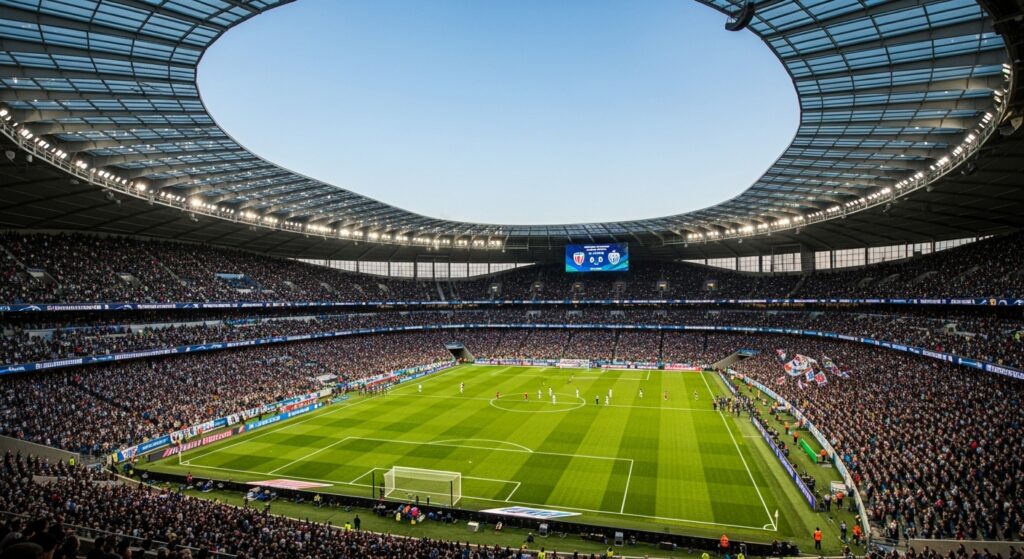
Sport is not only about what happens on the pitch, the court, or the field. It is about the collective experience that surrounds the game, the anticipation that builds before kickoff, the roar of thousands of voices rising as one, and the unique culture that turns a venue into something far greater than bricks and concrete. Stadiums are not simply arenas; they are living, breathing cathedrals of emotion. Around the world, certain stadiums are renowned not just for their architecture or size, but for the atmosphere that engulfs anyone who steps inside. The fans, traditions, chants, and sheer energy combine to create an experience that is unforgettable, even for those who may not consider themselves passionate sports followers.
When one thinks of legendary atmospheres, few places are as iconic as the Maracanã in Rio de Janeiro. This Brazilian colossus is not just a stadium; it is a symbol of the nation’s obsession with football. Built for the 1950 World Cup, it once held nearly 200,000 spectators, and though modern safety regulations have reduced its capacity, its spirit remains undiminished. The Maracanã is where dreams are born and heartbreaks are etched into memory, from Brazil’s shocking loss to Uruguay in the “Maracanazo” of 1950 to unforgettable goals scored by legends. The sound of Brazilian fans singing, drumming, and dancing in unison creates an atmosphere that transcends sport and becomes a carnival of passion.
In Europe, the Santiago Bernabéu in Madrid offers an atmosphere defined not just by noise, but by an aura of prestige and pressure. Home to Real Madrid, one of the most successful clubs in football history, the stadium exudes an intensity that visiting teams can feel the moment they arrive. It is not only the 80,000 fans chanting and applauding; it is the weight of history, the banners of Champions League triumphs, and the expectation that nothing less than victory is acceptable. Matches at the Bernabéu often feel like theater, with drama unfolding under the floodlights as fans live and breathe every pass, every foul, and every shot.
Crossing over to England, few experiences in football compare to Anfield, the home of Liverpool. Anfield is legendary for its atmosphere, especially on European nights when the crowd seems to lift the team beyond its limits. The anthem “You’ll Never Walk Alone” sung by tens of thousands of fans before kickoff is more than just a pre-match ritual; it is a spine-tingling declaration of unity and loyalty. Even neutral fans acknowledge that the sound reverberating through Anfield has the power to intimidate opponents and inspire players. Stories abound of rival managers and players admitting that the atmosphere at Anfield is unlike anything else in the sport, making it one of the most revered stadium experiences in the world.
Germany’s Westfalenstadion, more commonly known as Signal Iduna Park, provides another unforgettable spectacle. Home to Borussia Dortmund, it is famous for the “Yellow Wall,” a towering stand packed with over 25,000 fans dressed in yellow and black, waving flags, and chanting in unison. The sheer visual impact of the Yellow Wall is awe-inspiring, and the sound it produces is deafening. It is a stadium atmosphere that combines German efficiency with raw passion, turning match days into grand spectacles. Players often describe stepping out onto the pitch at Dortmund as both thrilling and overwhelming, as the crowd feels like a physical force pressing down on the opposition.
Beyond football, there are stadiums in other sports that boast equally electrifying atmospheres. Take Madison Square Garden in New York, for example. Known as “The World’s Most Famous Arena,” it has hosted everything from NBA finals to legendary boxing bouts, as well as concerts and cultural events. Yet in sports, particularly basketball and hockey, the Garden carries a unique electricity. Fans in New York are vocal, demanding, and fiercely loyal. The history of the venue, combined with the energy of the city itself, ensures that every event feels momentous. When the lights dim and the spotlight hits the court, Madison Square Garden transforms into an arena where legends are made.
Cricket stadiums, too, have their own kind of atmosphere, different in tone but equally powerful. Eden Gardens in Kolkata, India, is often described as the heartbeat of cricket. With a capacity that exceeds 60,000, it becomes a cauldron of noise when India plays. The chants, the rhythmic clapping, the collective gasp as the ball sails into the air—every moment is magnified by the passion of the crowd. Matches at Eden Gardens are not just games; they are festivals of cricket where fans live every delivery with an intensity unmatched anywhere else. Visiting players have often admitted to being stunned by the sheer volume and fervor of the supporters.
In rugby, few stadiums can rival the atmosphere of Eden Park in Auckland, New Zealand. The home of the All Blacks, one of the most successful teams in sports history, Eden Park is a fortress where fans and players merge into a single unstoppable force. The atmosphere reaches its peak during the haka, the traditional Māori war dance performed by the New Zealand team before every match. The stadium falls into a hushed anticipation as the haka begins, before erupting into roaring support as the game kicks off. For rugby fans, Eden Park is not just a stadium but a sacred ground where the sport’s most iconic moments are forged.
College sports in the United States also provide unique and unforgettable atmospheres. Few places capture this better than Michigan Stadium, known as “The Big House,” which can host over 100,000 fans on a game day. The sheer size of the crowd, coupled with the traditions of college football—marching bands, chants, and student enthusiasm—creates an atmosphere unmatched even by many professional stadiums. The passion of college sports fans, driven by loyalty to their alma mater, transforms every match into a grand spectacle where atmosphere is as important as the result.
Traveling to Turkey, the Şükrü Saracoğlu Stadium and Türk Telekom Stadium in Istanbul are famed for their ferocious fans. The atmosphere in Turkish football is among the most intimidating in the world, with flares, banners, and deafening chants filling the night sky. Opposing teams often describe playing in Istanbul as a test of nerve as much as skill, with the crowd creating a pressure cooker environment. These stadiums embody the deep connection between Turkish culture and football, where loyalty to one’s club is fierce and uncompromising.
What unites all these venues, despite differences in sport, culture, and size, is the ability to transport spectators into something larger than themselves. The atmosphere of a stadium is not simply created by architecture or acoustics, but by the collective energy of fans. It is the shared songs, the traditions passed down through generations, the anticipation before a big match, and the euphoria or despair that follows. A stadium atmosphere is memory in motion, a living experience that no broadcast or highlight reel can truly replicate.
To step into one of these iconic arenas is to feel the heartbeat of sport itself. Whether it is the carnival of the Maracanã, the thunder of the Yellow Wall in Dortmund, the haunting beauty of Anfield’s anthem, or the historic prestige of Madison Square Garden, the world’s best stadium atmospheres remind us why we love sport. They remind us that while players may come and go, the roar of the crowd endures, binding generations together in moments of unfiltered emotion. In the end, the best stadiums are not defined solely by their architecture or capacity, but by the passion they inspire and the unforgettable memories they create.




More Stories