
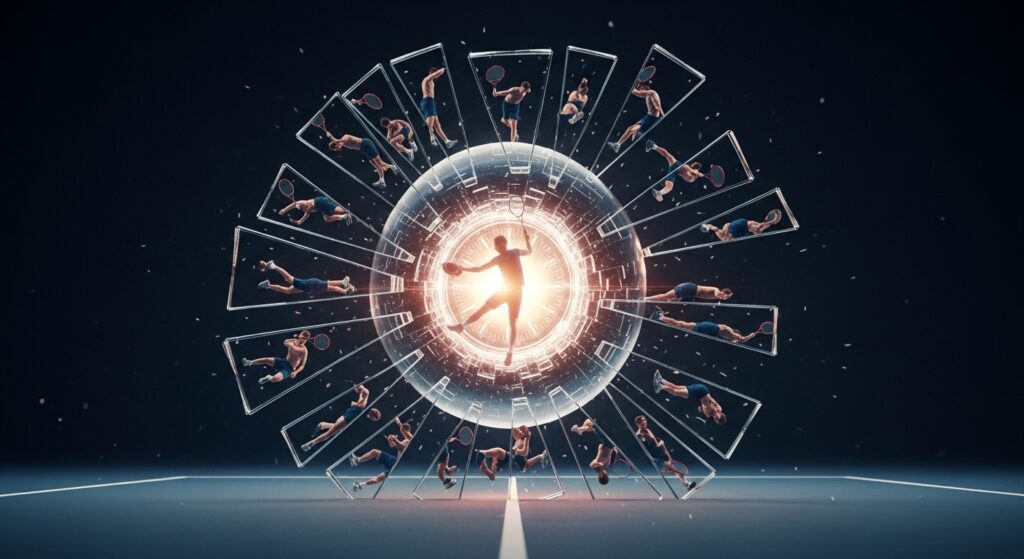
Introduction: The Universal Language of Competition
Sports have existed for as long as humanity has sought to test its limits, celebrate its triumphs, and find joy in motion. Across every continent and culture, from ancient gladiatorial battles to modern Olympic spectacles, the story of sports is woven deeply into the human experience. It transcends language, politics, and geography. When a sprinter bursts from the starting block, when a footballer bends a perfect free kick into the corner, or when a tennis player collapses in tears after a grueling five-set match, we witness the essence of humanity itself — resilience, ambition, and connection.
At its core, sport is far more than a game. It is an expression of who we are and what we can become when we push ourselves beyond the edge of comfort. Whether it’s the grace of a gymnast, the endurance of a marathon runner, or the strategy of a chess player, every form of sport reveals a different dimension of human excellence.
The Ancient Roots of Sports
The origins of sports reach back thousands of years, to times when physical contests were not only entertainment but essential for survival. Ancient civilizations such as Egypt, Greece, and China all had organized competitions designed to test strength, agility, and skill. The Greeks formalized this tradition with the Olympic Games in 776 BCE, held in honor of Zeus. These games symbolized peace among warring city-states and emphasized the beauty of human physical achievement.
Meanwhile, the Mayans played the Mesoamerican ballgame, a ritual sport combining physical prowess and religious meaning. In ancient Japan, the art of sumo wrestling reflected not just competition but also spiritual discipline. Across Africa, tribal games tested endurance, marksmanship, and teamwork. Sports were a form of cultural storytelling — a ritual through which societies passed down values of honor, bravery, and community.
In these ancient arenas, sport served multiple purposes: a test of courage, a method of training for war, and a form of communal celebration. It was both sacred and secular, an expression of physical excellence intertwined with deeper philosophical and moral ideals.
The Evolution of Modern Sports
The Industrial Revolution of the 18th and 19th centuries transformed sports from local pastimes into organized, codified activities. As societies urbanized and work schedules became more structured, people sought ways to channel their energy and find balance. Sports became both a leisure activity and a symbol of modern identity.
Rules were standardized, clubs were formed, and competitions began to transcend borders. Football, cricket, rugby, and baseball all developed official governing bodies that promoted fairness and consistency. The British Empire, with its global reach, played a major role in spreading sports across continents. Schools and universities adopted athletics as a key part of education, seeing in them the potential to cultivate discipline, teamwork, and moral integrity.
The revival of the Olympic Games in 1896 marked the beginning of the modern sports era. Under the vision of Pierre de Coubertin, the Olympics became a global celebration of athletic excellence and international friendship. From that moment, sports were no longer local or national — they were global.
Sports and Society: The Mirror of Human Culture
Sports do more than entertain; they reflect the societies that create them. They are a mirror of cultural values, political struggles, and social change. In many ways, the playing field becomes a stage for humanity’s greatest hopes and deepest conflicts.
In the 20th century, sports became a powerful platform for social movements. When Jesse Owens won four gold medals in the 1936 Berlin Olympics, he defied Nazi racial ideology and demonstrated the universality of talent and determination. Decades later, Muhammad Ali used boxing as a platform to speak against injustice, war, and inequality, turning his sport into a voice for civil rights.
Sports have also played a role in breaking gender barriers. Women like Billie Jean King, Serena Williams, and Simone Biles have redefined what it means to be a female athlete, proving that strength, grace, and intelligence are not confined by gender. The growing visibility of women in sports continues to inspire generations to challenge stereotypes and pursue excellence on their own terms.
Cultural identity, too, finds expression through sports. Football in South America is more than a game — it’s a national heartbeat. Cricket in India is akin to a religion. The pride of representing one’s nation in the Olympics or World Cup fuels patriotism and unity, even in the face of political and social division. When a team wins, it’s not just a victory for players; it’s a victory for millions of hearts who find in that moment a reflection of themselves.
The Psychology of Sports: The Battle Within
Beneath the physical challenges of sports lies a psychological dimension that often determines success or failure. Mental toughness, focus, and emotional control are just as vital as physical ability. The greatest athletes are not merely the strongest or fastest; they are those who master the mind.
In every sport, pressure is an inevitable companion. The roar of the crowd, the weight of expectation, and the fear of failure can either crush an athlete or fuel their best performance. Sports psychologists have long studied this relationship, uncovering how visualization, mindfulness, and positive self-talk can enhance performance. The concept of “flow,” described by psychologist Mihaly Csikszentmihalyi, captures the moment when athletes are fully immersed in their craft, performing effortlessly and instinctively.
Team sports introduce another layer of psychology — trust, communication, and leadership. A football team functions like a living organism, with each player dependent on others to fulfill their role. The chemistry between teammates can turn an average squad into champions or cause a talented one to crumble. Leadership, whether from a coach or captain, is not about control but inspiration, guiding others to believe in themselves and the collective vision.
Sports also teach resilience. Defeat, injury, and criticism are inevitable. Yet it is in recovery and persistence that athletes develop character. Every missed shot and every loss becomes a stepping stone toward mastery.
The Science Behind Performance
Modern sports are as much about science as they are about spirit. Advances in biomechanics, nutrition, and technology have revolutionized how athletes train and perform. Today’s champions are products not only of talent but also of data-driven precision.
Training regimens are now customized to the individual’s genetic profile, muscle composition, and recovery capacity. Wearable sensors track heart rates, hydration, and sleep cycles. Video analysis breaks down every movement, allowing athletes to refine their techniques to perfection. Nutrition science ensures optimal energy and recovery, while psychology helps sustain focus under extreme stress.
Even equipment has evolved dramatically. Lightweight materials, aerodynamic designs, and ergonomic footwear give athletes marginal gains that can make the difference between gold and silver. Yet despite these innovations, the essence of sports remains unchanged — the human spirit striving against limits.
Sports and Technology: The Digital Revolution
Technology has not only changed how athletes perform but also how fans experience sports. The rise of television, and later digital media, transformed local events into global spectacles. Millions now witness in real time what once could only be described through word of mouth or newspaper columns.
Instant replays, virtual graphics, and advanced statistics have deepened our understanding of games. Fans no longer just watch; they analyze, debate, and interact. Social media has blurred the line between athletes and audiences, creating direct connections that were once unimaginable. Athletes are no longer distant heroes but living personalities who inspire and engage daily.
E-sports — competitive video gaming — has taken this relationship between sport and technology to an entirely new level. Though lacking physical exertion, it embodies all the principles of competition, strategy, and skill. It challenges our definition of what constitutes a sport and reveals that human competitiveness can thrive in both physical and virtual arenas.
The Economic Power of Sports
Behind the spectacle, sports are also a massive economic force. Professional leagues, sponsorships, and broadcasting rights generate billions annually. Events like the FIFA World Cup and the Olympic Games draw not only athletes and fans but entire industries of tourism, merchandising, and media.
For athletes, sports can be both a dream and a business. The pursuit of excellence is often intertwined with contracts, endorsements, and public image. Clubs and federations must balance financial success with sporting integrity. The line between entertainment and competition sometimes blurs, as commercial interests influence schedules, transfers, and even rules.
Yet the economic power of sports is not inherently negative. It provides livelihoods, funds youth programs, and stimulates local economies. Stadiums become landmarks, and teams become symbols of community pride. When managed ethically, the business of sports can coexist with its deeper purpose — to inspire and unite.
The Role of Sports in Education and Youth Development
One of the most profound impacts of sports lies in education. From playgrounds to college fields, sports teach lessons that no textbook can convey. They cultivate discipline, teamwork, time management, and perseverance. Young people learn that success requires effort and that failure is not an endpoint but an opportunity to grow.
School sports programs offer more than just physical fitness. They build confidence and leadership. They help students discover their strengths and learn to respect diversity through cooperation. For many children, especially those from underprivileged backgrounds, sports can be a pathway to education and opportunity.
Coaches play an instrumental role in this process. A good coach is more than an instructor; they are a mentor who shapes character and ambition. They instill not only skills but values — honesty, humility, and respect. When sports are guided by this philosophy, they become a powerful tool for human development.
The Globalization of Sports
Today, sports transcend borders in ways unimaginable a century ago. A football match in Madrid can inspire fans in Africa, Asia, or America. The NBA draws talent from all corners of the world. The Olympics unite nations that may otherwise be divided politically or culturally. This interconnectedness has turned sports into a universal bridge — a global language of dreams and emotions.
The globalization of sports also creates cultural exchanges. Athletes become ambassadors, carrying their heritage to international audiences. Fans adopt teams and players from foreign lands, creating communities bound not by geography but by passion. While commercial motives often drive this global reach, the result is an unprecedented level of unity and understanding across societies.
However, globalization also brings challenges — from the exploitation of young athletes to the loss of local traditions. Balancing the global appeal of sports with the preservation of local identity remains one of the great questions of the 21st century.
The Dark Side of Sports
No exploration of sports is complete without acknowledging its darker sides. Corruption, doping, and exploitation have stained many of its brightest moments. The pressure to win at any cost sometimes leads athletes and institutions to betray the very values they claim to uphold.
Performance-enhancing drugs have tested the credibility of competition, while match-fixing scandals have shaken public trust. The commercial nature of modern sports can turn young athletes into commodities, valued more for potential profit than human growth. Even fans can cross lines, with violence, racism, and toxicity tainting what should be celebrations of unity.
Yet despite these flaws, the enduring beauty of sports lies in its capacity for redemption. Every scandal provokes reform, every injustice ignites advocacy, and every setback becomes a call to restore integrity. Sports, like the societies that create them, are constantly evolving — striving to uphold their ideals against the forces that threaten them.
The Future of Sports: Innovation and Inclusion
As the world changes, so too does the landscape of sports. Sustainability, inclusivity, and technology are shaping the next era of athletic competition. There is a growing awareness that sports must be accessible to all — regardless of gender, ability, or background. Paralympic athletes continue to redefine what is possible, proving that the spirit of competition knows no physical boundaries.
Environmental sustainability is also entering the conversation. Mega-events must now consider their ecological footprint. Stadiums are being designed with renewable energy and minimal waste in mind. The future of sports must harmonize human achievement with planetary responsibility.
Technological innovation will continue to blur the line between human and machine performance. Artificial intelligence may soon assist in coaching, injury prevention, and strategy analysis. Virtual and augmented reality may redefine fan engagement, creating immersive experiences that bring people closer to the game than ever before.
Ultimately, however, the heart of sports will remain human. The joy of competition, the thrill of victory, and the agony of defeat cannot be replicated by machines or algorithms. Sports will endure because they speak to something eternal within us — the desire to connect, to strive, and to transcend.
Conclusion: Why Sports Will Always Matter
Sports are not just games; they are reflections of the human journey. They capture the essence of our shared struggles and triumphs, our need for belonging, and our pursuit of excellence. In every match, race, or tournament, we see the drama of life itself — preparation, conflict, courage, loss, and redemption.
As long as there are people who dream of running faster, jumping higher, or working together toward a common goal, sports will continue to thrive. They remind us that we are capable of greatness, not only as individuals but as communities united by purpose. In the end, sports are not about winning or losing; they are about becoming — becoming stronger, wiser, and more connected to one another.
From ancient arenas to modern stadiums, from dusty playgrounds to glowing screens, the story of sports is the story of humanity. It is a timeless dance of body and spirit, a testament to what we can achieve when we chase the limits of possibility and find, in motion, the meaning of being alive.




More Stories
Beyond the Scoreboard: How Sports Shape Minds, Cultures, and the Future
Beyond the Game: The Transformative Power of Sports in Society
Beyond the Scoreboard: How Sports Shape Minds, Nations, and Everyday Life